


A Market Moving from Heavy Supply to Possible Rebalancing
The latest outlook reflects a year of record production across Canada. Total crop stocks are noticeably higher than last year and well above the five-year average. Strong harvest results in 2025 built comfortable inventories across most field crops.
At the same time, export volumes softened slightly. As a result, carry-out stocks increased significantly. This larger supply situation is quietly influencing market tone, with most crops experiencing softer price levels compared to last season.
Looking ahead to next season, farmers are expected to adjust planting decisions based on crop rotation, moisture conditions, and relative returns. Overall seeded area should remain stable, but pulses and special crops are projected to decline noticeably. If normal growing conditions return, production may improve next season, helping the market gradually rebalance.
Lentils: Green Lentils/Red Lentils
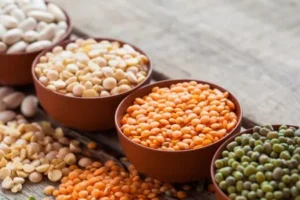
Lentil exports are performing well, particularly with strong demand from Turkey, India, and the UAE. However, very large beginning stocks and strong overall supply are keeping the market under quiet pressure.
Prices for large green lentils and red lentils have moved differently in the short term. However, green lentils have been more unstable, mainly because of the larger leftover stocks. As a result, the price gap between green and red lentils is much smaller than it was last year.
Global activity remains active:
The market has recently become a bit stronger, but overall supply levels are still comfortable.
Outlook
Canadian lentil area is expected to decrease. Production may drop significantly, but large carry-in stocks will keep overall supply relatively stable. Exports are forecast to increase slightly. With lower production and gradual stock reduction, prices are expected to strengthen moderately next year.
Market Direction: Under supply pressure → Market may slowly stabilize with a stronger outlook next season

Exports are forecast to reach record levels, with strong demand from the U.S., EU, Turkey, and Pakistan. However, record supply has resulted in significantly higher stocks.
The overall price environment is softer compared to last year due to larger global availability.
Internationally:
Large-caliber Kabuli chickpeas continue to guide overall pricing structure, although spreads between sizes remain wider than in past years due to strong supply of smaller calibers.
Outlook
Area is expected to decline as growers react to lower returns. Production may fall sharply, but large carry-in stocks will limit overall supply reduction. Prices are projected to improve modestly next season.
Market Direction: Sideways to soft → Mild recovery expected
Exports are expected to remain strong, supported by steady demand from Bangladesh and the United States, even as Indian demand slows. However, record supplies have pushed carry-out stocks to historically high levels.
Despite occasional short-term firmness in yellow peas, the overall tone remains softer compared to last year. Green peas continue to hold a premium over yellow peas, although the spread is significantly narrower than in the previous season.
The United States has increased production this year, and Canadian exports to the U.S. are running slightly ahead of last year’s pace.
Exports remain steady, with the EU and U.S. as key destinations. However, larger North American supply has weighed on the market. Most bean classes are trading at noticeably lower levels compared to last year.
U.S. production declined overall, but high beginning stocks continue to influence supply availability. This is keeping the Canadian market on the defensive side.
Market Direction: Weak tone → Expected improvement next season
Canada’s pulse sector entered 2025–26 with record production and historically high stocks. This has naturally created a softer pricing environment across most products.
However, early signs of acreage reduction for 2026–27 — especially in lentils, peas, beans, and chickpeas — suggest that supply pressure may gradually improve next season.
If production declines as projected and export demand remains steady, the market could shift toward better balance in 2026–27.
Below is a simplified visual summary of current market tone:
| Product | 2025–26 Trend | 2026–27 Outlook |
| Dry Peas | Soft / Heavy Supply | ↗ Recovery Potential |
| Lentils | Under Pressure | ↗ Gradual Firming |
| Dry Beans | Weak Tone | ↗ Stronger Balance |
| Chickpeas | Sideways to Soft | ↗ Mild Improvement |
Soft = Supply pressure
Sideways = Balanced activity
↗ = Improving outlook