
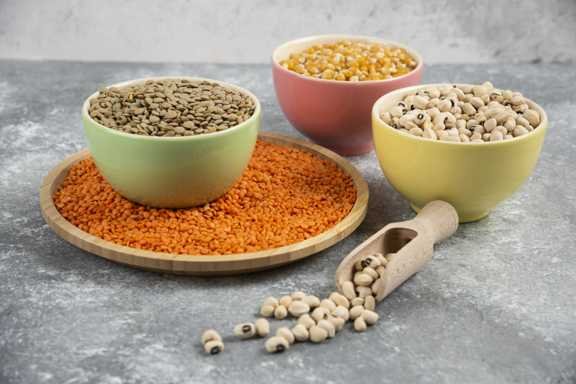
As we move through the 2025–2026 crop year, the global market for Canadian pulses and legumes continues to evolve under the influence of strong production, shifting trade flows, and changing demand patterns.
From my perspective as a Canadian exporter, this season is defined by one key factor: high supply with stable but selective demand. This is shaping both the movement of goods and the overall pulses price environment across key markets.
Canada has reached a new milestone this year. Total production of major field crops has climbed to record levels, supported by strong yields across Western Canada. This includes key crops such as green lentils, red lentils, peas, and chickpeas.
With this level of supply, export activity remains active and above historical averages, even though shipment volumes are slightly more balanced compared to last year. At the same time, inventories are building, creating a market where buyers have more options and flexibility.
From a pricing perspective, this environment naturally leads to a softer tone across many crops. However, this also creates strategic buying opportunities, especially for importers looking to secure consistent quality from reliable Canadian suppliers.
Looking ahead to 2026–2027, planting intentions suggest a more balanced outlook. Farmers are expected to slightly reduce pulse acreage, including lentils, while shifting some land to other crops. This could gradually tighten supply in the future and support market stability.

The Canadian lentils sector continues to play a central role in global trade.
Exports are expected to reach around 2.1 million tonnes this season, with key destinations including India, Turkey, and the UAE. Demand remains steady, but the large available supply is influencing market behavior.
This year, we are seeing an interesting shift between green lentils and red lentils:
As a result, the price gap between these two types has narrowed significantly compared to last year. This creates new opportunities for buyers who are flexible with specifications.
Globally, production has also increased. Australia, for example, reported a strong harvest, while the United States expanded its lentil output—mainly green types. This additional supply is adding to the overall availability in the market.
Despite these factors, demand remains present. Countries continue to rely on Canadian origin for quality and consistency, especially in bulk shipments.
From a forward-looking perspective, reduced planting area in Canada may help bring the market into better balance next season. This is an important signal for buyers monitoring lentils price trends over the medium term.
The Canadian chickpeas market remains active, supported by demand from the US, Europe, and the Middle East.
Even with strong global production, including higher output in the United States and Australia, Canadian chickpeas continue to find their place in international markets due to quality and reliability.
This season, supply levels are high, which is influencing overall pricing trends. However, looking ahead, a potential tightening in global supply could provide more support to the market.
Geopolitical factors are also playing a role. Rising freight costs and uncertainty in key shipping routes are making buyers more cautious, especially for forward contracts.
Dry peas continue to be an important part of the Canadian pulses and legumes portfolio.
Exports are expected to grow, supported by strong demand from China and steady interest from India. Policy changes, including reduced tariffs, are also helping facilitate trade flows.
At the same time, high carryover stocks are shaping the market. This creates a more competitive pricing environment, especially for yellow peas.
An important factor to watch is India’s domestic production. A larger crop there could influence import demand in the coming months. However, demand from China and the US is helping to offset this risk.
Canadian Pulses Exports (Million Tones)
| Product | 2024-25 | 2025-26 | 2026-27 |
| Green Lentils | 1.10 | 1.03 | 1.05 |
| Red Lentils | 0.95 | 1.08 | 1.10 |
| Dry Peas | 2.20 | 2.50 | 2.70 |
| Chickpeas | 0.50 | 0.54 | 0.54 |
https://agriculture.canada.ca/
International trade activity in March showed a mixed but stable pattern:
At the same time, logistics and freight costs have become more important due to geopolitical tensions, particularly in the Middle East. This is affecting how buyers and exporters plan shipments.
Overall, the market is not weak, but it is selective and price-sensitive, with buyers carefully timing their purchases.
From my perspective, this is a very interesting moment in the market.
Yes, supply is strong. But demand is still there—and more importantly, it is consistent. Buyers today have the advantage of choice, better negotiation positions, and access to high-quality Canadian lentils and Canadian chickpeas.
For importers, this is a good time to:
Looking ahead, expected reductions in planting area could gradually support the market. This means today’s conditions may not last indefinitely.
At Lord Agro Trade, we continue to monitor the market closely and work directly with farms and processors to offer consistent quality and competitive options.
Our latest pulses price and lentils price updates are regularly published on our website. I recommend checking them frequently to stay aligned with the market and identifying the best buying opportunities.